

The Ultimate Guide to RV Camping on Your Own Property
October 21, 2025How to Create a Sustainable Off-Grid Campsite
October 21, 2025So you’ve got your piece of land, and now you’re thinking about putting up a fence. Maybe you want to mark your boundaries, keep the wildlife out of your camping area, or just have that satisfaction of defining what’s yours. Whatever your reason, fencing a remote property comes with its own set of considerations that are different from fencing a typical suburban yard.
The good news? It’s totally doable, even if you’ve never installed a fence before. Let’s walk through what you need to know to get it done right.
Start with the County (Always)
Before you buy a single fence post, pick up the phone and call your county planning or zoning office. This might seem like a hassle, but it’s the most important step you’ll take. Different counties have different rules about fencing, and what’s perfectly fine in one place might require permits or have restrictions in another.
Ask about setback requirements from roads and property lines, height restrictions, and whether you need any permits. Some counties don’t regulate agricultural fencing at all on rural land, while others have specific requirements. A five-minute phone call now can save you from having to move or remove fencing later.
While you’re at it, verify your exact property boundaries. You’d be surprised how often people think they know where their lines are, only to find out they’re off by ten or twenty feet. If there’s any question, it’s worth having a surveyor come out. Yes, it costs money, but building on your neighbor’s land costs a whole lot more in headaches down the road.
Know Why You’re Fencing
Different goals call for different fence types. Are you keeping deer out of a future garden spot? Marking your boundary so you know where your property ends? Creating a safe area for dogs or livestock someday? Planning to camp in one section and want to define that space?
Each purpose has its own requirements. A wildlife fence needs different height and material than a simple boundary marker. Being clear on your “why” will save you money and effort by helping you build the right fence the first time.
For most remote property owners just starting out, a simple perimeter fence or partial fencing around high-use areas makes the most sense. You can always add more later as your plans develop.
Access and Materials: The Remote Reality
Here’s where remote properties get interesting. That dirt road that seemed fine when you drove in? Think about how you’ll get materials down it. Fence posts, rolls of wire, bags of concrete—it all adds up fast in weight and bulk.
Many folks find it easier to make multiple trips with a pickup truck than to try renting a larger vehicle that might get stuck on rough access roads. Break your project into manageable phases if needed. There’s no rule saying you have to fence everything at once.
Consider where you’ll store materials, too. Even if you’re not staying on your land full-time, you’ll want a plan for keeping supplies secure and dry between work sessions. Theft can happen in remote areas, and weather can damage materials left exposed.
Choosing Your Fence Type
For remote rural properties, simpler is usually better. You’re likely working solo or with minimal help, possibly without power tools, and definitely without easy access to a hardware store if you forgot something.
Wire fencing is the workhorse of rural land. It’s affordable, relatively easy to install, and works for most purposes. Barbed wire is traditional for large perimeters and livestock, though be aware it can injure wildlife. Woven wire (also called field fence) is better if you want to keep smaller animals in or out. High-tensile smooth wire is another good option that’s less likely to injure animals.
T-posts and wooden posts each have their place. T-posts are lighter to carry, easier to install, and don’t rot. They work great for wire fencing. Wooden corner posts and gate posts give you the strength you need at stress points. Many people use wooden posts every 50-100 feet along the line for extra stability, with T-posts in between.
Rail fencing looks nice but requires significantly more material and labor. Most people start with simpler options and might add decorative fencing later around a building site or main entrance.
Electric fencing can be excellent for keeping animals in or out, but it requires a power source (usually a solar charger on remote property) and regular maintenance to keep vegetation from shorting it out. It’s worth considering as you develop your property, but might not be the best first fence.
Tools and Supplies You’ll Actually Need
Don’t overthink this. People have been building fences with hand tools for generations. Here’s what makes the job manageable:
For setting posts, a post hole digger or digging bar will be your best friend. On rocky ground, you might need a rock bar too. A heavy mallet or fence post driver helps set T-posts—you can rent or buy these, but a sledgehammer works in a pinch. If you’re setting wooden posts in concrete, you’ll need a wheelbarrow or mixing tub.
For the fence itself, wire cutters, fence pliers (sometimes called fence tool), come-alongs or fence stretchers for tensioning wire, and plenty of work gloves. Wire work is tough on hands.
Measuring tape, string line, and a line level help keep things straight. A cordless drill makes attaching hardware easier if you have power available. Don’t forget basic safety gear—gloves, sturdy boots, eye protection, and sun protection for those long days outside.
The Installation Process
Start with your corners. These are the foundation of any wire fence. Corner posts bear the most stress, so they need to be strong and well-set. This usually means wooden posts at least 4-6 inches in diameter, set 3-4 feet deep, ideally in concrete. Many people add diagonal braces from the top of the corner post to the base of the next post in line for extra strength.
Once corners are solid, mark out your line. String line between corners shows where your fence will run and helps keep it straight. Walking the line before you start helps you spot issues like big rocks, washouts, or places where you might need to adjust your route.
Set your line posts according to your plan—typically every 8-12 feet for T-posts, though you can go farther if the ground is even and you’re using high-tensile wire. In rough terrain, you might need more frequent posts to follow the ground contours.
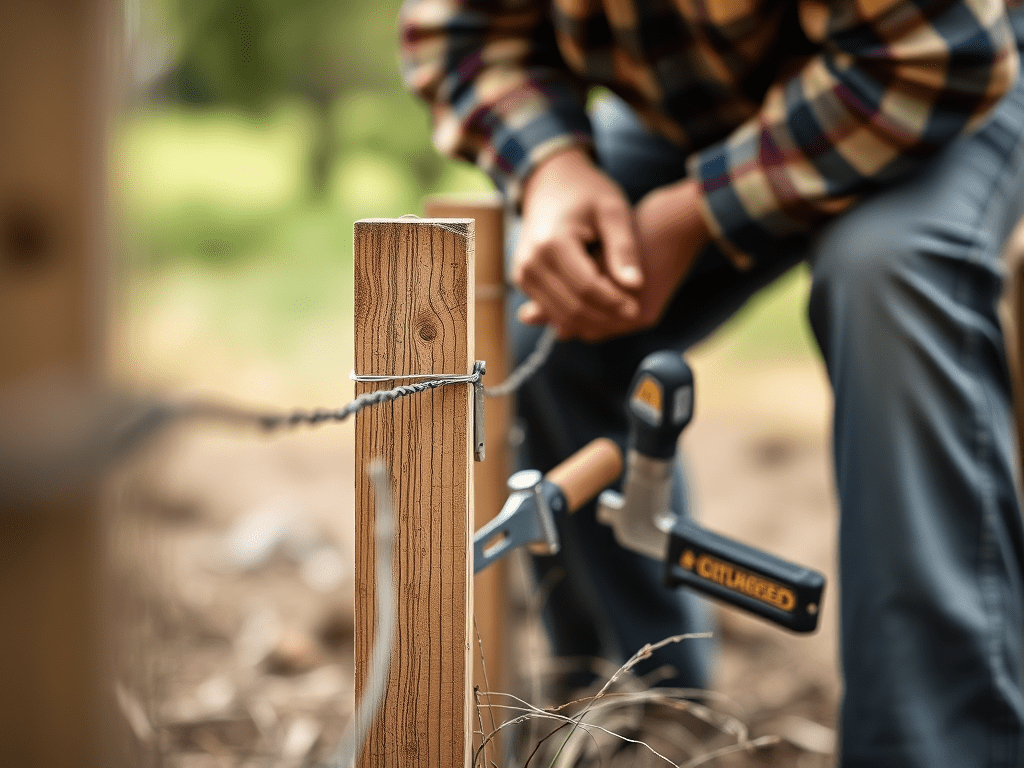
When you’re ready to run wire, start from one corner. Unroll the wire along the ground first—don’t try to unroll it as you go or you’ll end up with a tangled mess. Attach it to your starting corner post, then move down the line stretching and stapling or clipping as you go. The come-along or fence stretcher is key for getting wire tight enough.
Gates are worth doing right. Even a simple wire gate is fine for occasional access, but put proper gate posts in with concrete and use sturdy hardware. You’ll use these entrances regularly, and a good gate is worth the extra effort.
Working with the Terrain
Remote properties often mean varied terrain, and that affects fencing. On flat ground, keeping fence straight and level is pretty straightforward. Hills and gullies require more thought.
Going up or down hills, your fence can either follow the ground contour (stepped) or run at an angle. Following the contour usually looks better and works better for keeping animals in or out. It does take more posts to make it work smoothly.
In low spots where water runs, consider how your fence will handle washouts. Sometimes the best approach is to leave a gap or put in a water gap (a section that can move with water flow). Don’t fight nature too hard, or you’ll just be rebuilding fence after every good rain.
Rocky ground can be challenging for post holes. You might need to use rock bases (setting posts on flat rocks rather than in holes) or drill holes with a gas-powered auger if you’re doing a lot of posts. Sometimes the practical solution is adjusting your fence line to avoid the worst areas.
Maintenance and Long-Term Thinking
Fences need maintenance. Count on walking your fence line at least once or twice a year to check for damage, loose wires, leaning posts, and vegetation growing into the fence. Catching small problems early beats major repairs later.
If you’re not visiting your land regularly, that maintenance becomes trickier. Some folks find it makes sense to fence only the areas they’ll use most often rather than trying to maintain miles of perimeter fence they rarely see.
Trees falling on fences, animals pushing through, weather damage—it all happens. Build your fence with repairs in mind. Keep some extra T-posts, wire, and hardware stored on your property so you can fix issues when you visit rather than making special trips to town.
Starting Small and Building Up
Here’s something many experienced landowners will tell you: start with less fence than you think you need. Once you’ve got some experience and see how you actually use your land, you’ll make better decisions about where additional fencing makes sense.
Maybe start with a simple perimeter fence just around your main camping or building area. Or perhaps fence the area you’re worried about wildlife accessing. You can always add more sections later, but removing fence you didn’t need is just wasted effort and expense.
Some people tackle their fencing project over multiple visits, doing one section at a time. This spreads out the physical work and the cost. It also lets you learn from each section to do the next one better.
The Reality Check
Let’s be honest—fencing is physical work. It involves digging, lifting, hammering, and stretching wire. If you’re not in great shape, plan to take it slow and break the project into smaller sessions. There’s no shame in doing a hundred feet at a time and calling it a day.
Working alone on a remote property? Let someone know where you are and when you expect to be done. Bring more water than you think you need. Take breaks. Heat exhaustion and dehydration sneak up on you when you’re focused on getting work done.
Weather matters too. Fencing in summer heat can be brutal, but frozen ground makes post holes nearly impossible. Spring and fall are usually your best windows, though mud from spring rains can create its own challenges.
When to Call in Help
Some parts of fencing benefit from experience. If you’ve never stretched wire before, finding a neighbor or acquaintance who has can save hours of frustration. Many rural areas have folks who do fencing work on the side—hiring someone for a day to help with the tricky bits might be money well spent.
For specialized situations—extremely rocky ground, very long fence runs, or unusual terrain—professional help might make sense. Even if you want to do most of the work yourself, having a pro set the corners and gates can give you a solid foundation to work from.
Making It Happen
Installing a fence on your remote property is one of those projects that feels really satisfying when you finish. There’s something about walking your own land along a fence you built with your own hands that makes the place feel more like yours.
Take your time. Do your planning and prep work. Start with the basics and build from there as you learn what works on your particular piece of land. Check with your county. Respect your physical limits. And remember—generations of people have figured this out with far fewer resources than you have available.
Your fence doesn’t have to be perfect to be functional. It just needs to do the job you need it to do. Everything else is details you’ll figure out as you go.