
Navigating Permitting and Zoning Laws for Your Off-Grid Build
October 29, 2025What Happens If Your Property Doesn’t Have Legal Access?
October 29, 2025When you finally get the keys to your own piece of rural land, one of the first things you’ll want to do is walk your property lines. There’s something deeply satisfying about standing at the corner of land that’s truly yours. But here’s the thing – if you can’t clearly see where your property begins and ends, you might find yourself in an awkward conversation with a neighbor, or worse, accidentally clearing trees or building on land that isn’t yours.
Marking your boundaries properly isn’t just about avoiding problems. It’s about taking ownership in the truest sense, knowing exactly what’s yours, and being a good neighbor in the process.
Start With a Professional Survey
Before we talk about paint, posts, or fencing, let’s get one thing straight: you need to know where your actual property lines are. If your land hasn’t been recently surveyed, or if you can’t find the existing survey markers, hiring a licensed surveyor is money well spent.
A surveyor will locate your property corners using legal descriptions from your deed and mark them with official markers – usually iron rebar or pipes driven into the ground. These markers are your legal reference points, and everything else you do will build from there. Yes, it’s an expense, but think of it as insurance against boundary disputes and legal headaches down the road.
Once the surveyor has marked your corners, take photos, note GPS coordinates if you have them, and keep the survey documents somewhere safe. You’ll reference these for years to come.
Choosing Your Marking Method
Now that you know exactly where your lines are, you can decide how to make them visible for everyday purposes. The right method depends on your property, your budget, and what you’re trying to accomplish. Here are your main options:
Flagging and Ribbon
If you need to mark your lines quickly and inexpensively, surveyor’s tape or flagging ribbon is your friend. This bright plastic ribbon (usually pink, orange, or yellow) is cheap, visible from a distance, and easy to tie on trees, fence posts, or stakes along your boundary.
The downside? It’s temporary. Weather, wildlife, and time will take their toll. Flagging is perfect when you first buy your land and want to get familiar with your boundaries, or if you’re preparing for a project like fence installation. But don’t count on it lasting more than a year or two in harsh weather.
Practical tip: Tie your flagging about eye level on trees every 20-30 feet along your boundary line. Use a bowline or similar knot that won’t slip, and wrap it at least twice around the tree or post.
Paint Blazing
Here’s a method that’s stood the test of time in rural areas: marking boundary trees with paint. You’ll see this throughout rural America – trees with painted spots or stripes indicating property lines.
For the corners where your surveyor placed markers, many landowners paint the trees nearby (or the marker posts themselves) with a distinct color and sometimes their initials or property number. Then, along the boundary line between corners, you can paint blazes on trees to make the line easy to follow.
Choose bright, durable exterior paint – barn red, highway yellow, or orange work well. Some folks use spray paint for convenience, while others prefer brush-on paint for durability. Either way, you’re looking at a marking system that can last 5-10 years or more before needing a refresh.
The neighborly approach: Before you start painting trees, especially if they’re right on the line, it’s courteous to have a conversation with adjacent landowners. Most neighbors appreciate clearly marked boundaries, but it’s always better to communicate first.
Corner Posts and Markers
Beyond the official survey markers, many landowners add visible corner posts to make their property corners easy to find. This might be a treated 4×4 post, a metal T-post, or even a decorative stone marker. Some people paint these bright colors, attach reflective tape, or add their name and property number.
The advantage here is that corner markers are relatively permanent and don’t require you to paint trees. They’re especially useful if your property corners don’t have large trees nearby, or if you want something that’s visible in all seasons.
T-Posts and Wire
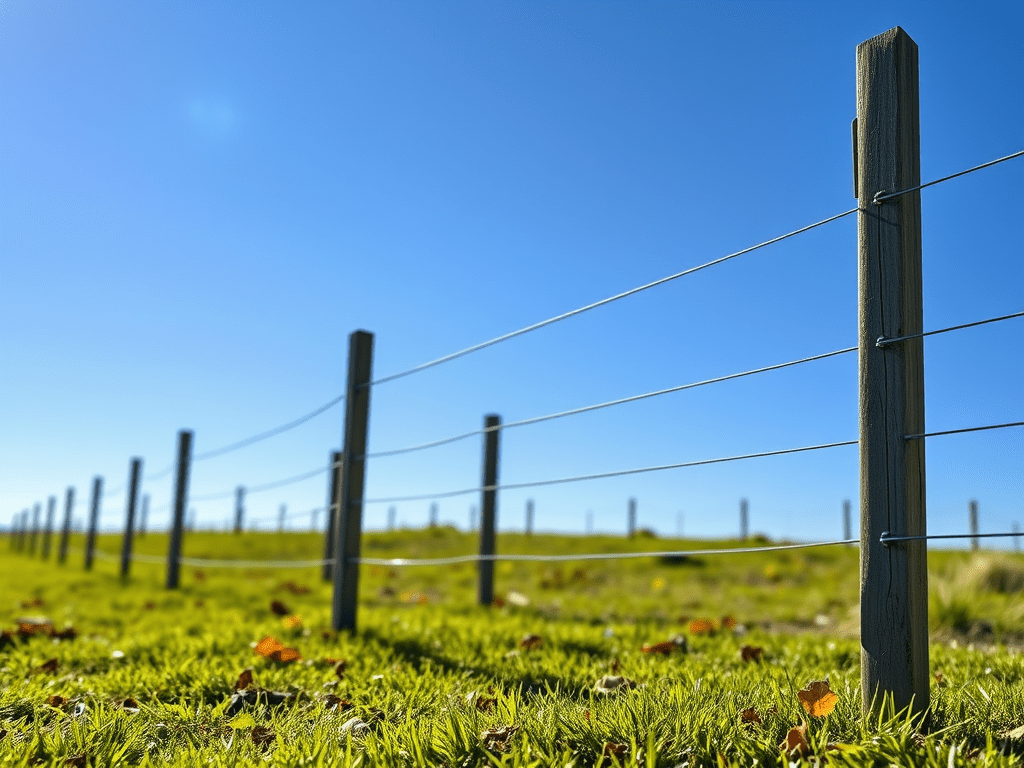
If you want to make your boundary really clear – or keep livestock contained – T-posts with a single strand of wire or electric fence can do the job. This isn’t a full fence, but it’s enough to make the boundary visible and establish a physical line.
This method requires more investment in time and materials, but it’s much more permanent than paint or flagging. Just drive T-posts every 10-20 feet along your boundary and run wire between them. Even a single strand of smooth wire makes a clear statement about where the property line runs.
Important note: Before installing any posts or fencing, check with your county about setback requirements and whether you need to keep your improvements a certain distance inside your actual property line. This varies by location.
Full Fencing
A proper fence is the ultimate boundary marker – it’s permanent, functional, and leaves no doubt about where your property ends. Whether you go with barbed wire, woven wire, split rail, or another style depends on your needs and budget.
The beauty of a fence is that it serves multiple purposes: marking boundaries, containing animals, keeping out unwanted visitors, and sometimes just looking good. The downside is cost and maintenance. A fence is a commitment.
If you’re considering fencing, work from your survey markers and possibly set back a few inches or feet from the actual property line (especially on side boundaries). This prevents disputes if your fence posts end up slightly off-line, and it gives you clear access to maintain both sides of the fence.
Making Your Marks Last
Whatever marking method you choose, maintenance matters. Here’s what that looks like in practice:
Walk your lines regularly. Make it a habit to walk your property boundaries at least once or twice a year. You’ll notice if flagging has fallen off, if paint is fading, or if posts are leaning. You’ll also catch any encroachment issues early – like a neighbor’s brush pile creeping onto your land or someone using your property as a shortcut.
Refresh paint every 5-10 years. Even the best exterior paint fades and weathers. Set a reminder to re-paint your boundary blazes before they disappear completely. It’s much easier to repaint over existing marks than to relocate them from scratch.
Document everything. Take photos of your marked corners and boundaries. Keep your survey documents, notes about when you installed markers, and any correspondence with neighbors about boundaries. If you ever sell the property, this information is gold for the next owner.
Check county requirements. Some counties have specific regulations about boundary markers, especially if you’re installing fencing or posts near roads. A quick call to your county planning department can save you from having to redo work later.
What Not to Do
Let’s talk about a few approaches that seem like good ideas but can cause problems:
Don’t rely on old fence lines. That rusty barbed wire fence might be close to the property line, but it’s probably not exact. Fences shift, sag, and sometimes were never on the actual boundary to begin with. Always verify with a survey.
Don’t blaze trees randomly. Only mark trees that are clearly on or very near your boundary line, and use a consistent system. Random paint marks throughout your property will just confuse everyone.
Don’t be vague with neighbors. If there’s any uncertainty about where the line runs between your property and a neighbor’s, don’t guess and don’t assume. Get a survey, communicate clearly, and work together to establish a mutually agreed-upon boundary.
Special Considerations for Recreation Land
If you’re buying your land primarily for recreation – camping, hunting, or just getting away from it all – clear boundary markers become even more important. You want to know exactly where you can camp, where you can put up targets for shooting, and where your neighbor’s property begins.
Consider these additions to basic boundary marking:
Interior trails: In addition to marking your perimeter, you might want to mark trails that lead to your favorite camping spots or interior corners. This helps you (and guests) navigate without accidentally wandering onto someone else’s land.
Gate and entry markers: If you have an access road or trail entering your property, mark this entrance clearly. It helps you find your way back, and it can help prevent others from accidentally using your property thinking it’s public land.
Seasonal visibility: Remember that the same boundary markers that are easy to see in summer might disappear under snow or dense vegetation. Consider this when choosing your marking method – higher markings on trees or tall posts work better year-round.
The Bottom Line
Marking your property boundaries well is one of those tasks that seems simple but matters enormously. It prevents disputes, helps you be a good neighbor, and lets you use your land confidently. You don’t need to install a fortress-like fence system (unless you want to), but you should be able to walk your property lines at any time and know exactly where you are.
Start with a good survey if you don’t have one, choose marking methods that fit your property and budget, and commit to maintaining those marks over time. Your future self – and your neighbors – will thank you.
There’s real peace of mind in knowing exactly what’s yours. That feeling of standing at your property corner, seeing your markers clear and true, knowing you’ve done right by the land and by your neighbors? That’s part of what makes land ownership so rewarding.